
Academic Interview Anxiety: How to Stay Calm and Confident
Your interview is tomorrow. You have read all the professor’s papers. You know your research.
You have reviewed your application. Yet somehow, your heart is racing. If this sounds familiar, you are not alone!
Academic interview anxiety affects almost every applicant, including highly qualified students. In fact, many candidates do not struggle because they lack knowledge. They struggle because nervousness prevents them from communicating that knowledge effectively.
How to prepare for an interview is a skill that comes with practice. Don't worry. By practicing your interview, you can approach interviews with more confidence and increase your chances of success.
Most candidates prepare for interviews in isolation. That’s why strong profiles still get rejected! Acatrix changes that.
Start your application profile
Why Do Academic Interviews Feel So Stressful?
Academic interviews often feel different from job interviews. Applicants may spend months on searching for positions, contacting professors, writing the SOPs, preparing the applications, and emailing the professors.
As a result, the interview can feel like the moment everything depends on a single conversation. This creates pressure that naturally leads to anxiety!
The Real Problem: Anxiety Disrupts Communication
Most nervous applicants do not suddenly forget their research.
Instead, anxiety affects:
speaking speed
sentence structure
confidence
memory recall
logical thinking
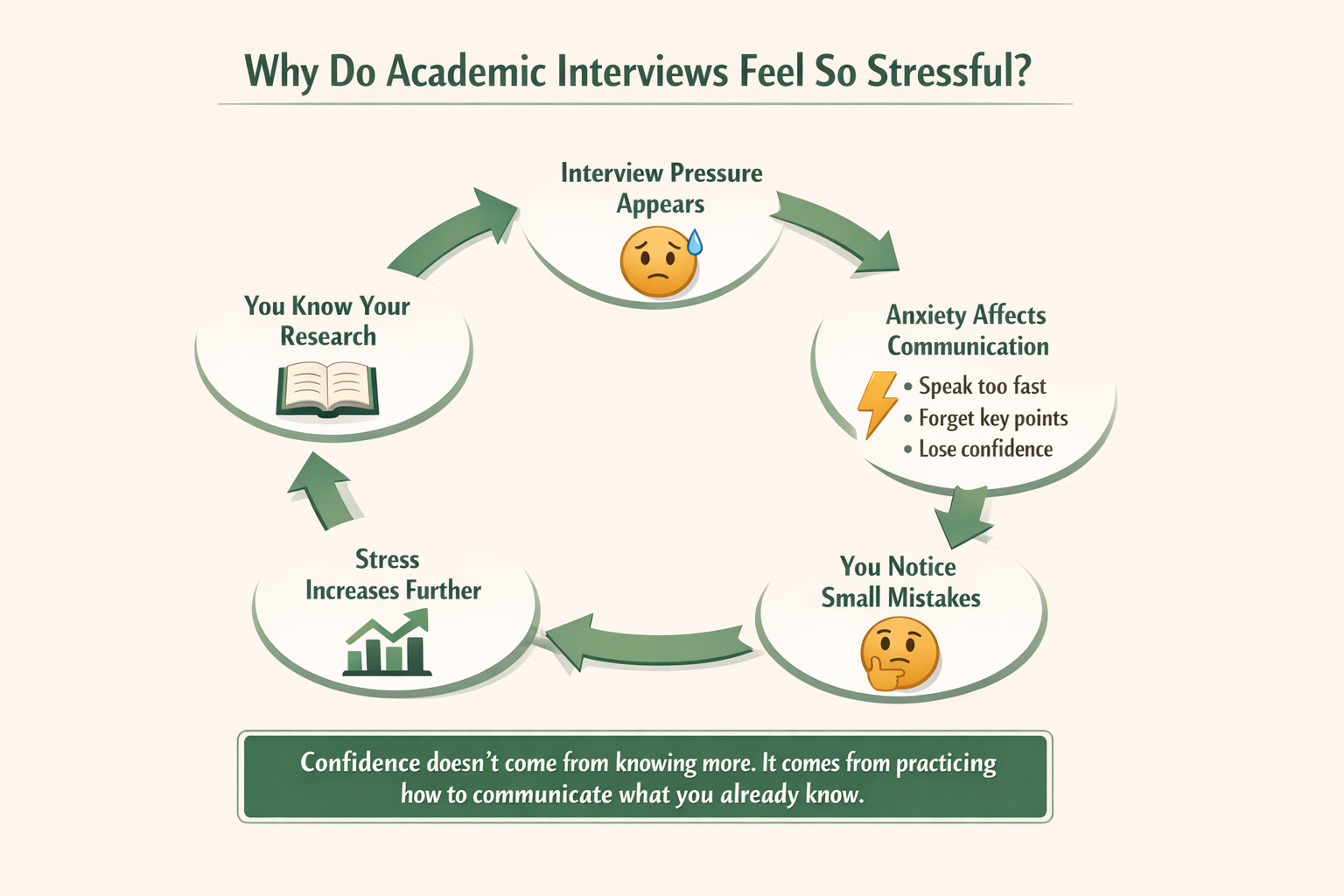
This creates a dangerous cycle.
You become nervous.
Then you communicate less clearly.
Then you notice yourself struggling.
Then you become even more nervous.
Breaking this cycle is one of the keys to interview success. If you want to start practicing your interview, start now with the mocked interviwe preparation in text, voice, and video with no limitation.
Start your interview simulation!
Acatrix builds alignment. Most tools help you answer questions. Acatrix helps you ensure your answers belong to your application story. That difference determines whether you are just prepared or actually competitive!
Common Signs of Academic Interview Anxiety
Physical Symptoms
Many students experience:
rapid heartbeat
sweating
shaking hands
dry mouth
difficulty breathing
Mental Symptoms
Applicants may also experience:
overthinking
negative self-talk
difficulty concentrating
fear of failure
excessive worry about mistakes
Your Academic Journey: From Search to Settlement. Start Today!
Practical Ways to Reduce Academic Interview Anxiety
You know Your Own Research Better Than Anyone Else! You cannot predict every question.
1. Stop Memorizing Answers
One of the most common mistakes applicants make is rehearsing entire responses word for word. Instead, prepare: key ideas, examples, stories, and research explanations. Think in concepts, not scripts.
2. Practice Speaking Out Loud
Reading interview answers silently is very different from speaking them. Many students discover that ideas which seem clear in their heads become difficult to explain verbally.
Practice: introducing yourself, discussing your research, and explaining future goals. The more you verbalize ideas, the more natural they become.
3. Prepare for Common Interview Questions
Many interview questions are surprisingly predictable.
Examples include:
Tell me about yourself.
Why this program?
Why this professor?
What are your research interests?
What are your future goals?
Preparing for these questions can dramatically reduce uncertainty.
You can also explore the Top 10 Most Common PhD Interview Questions (2026) to understand what professors frequently ask during academic interviews.
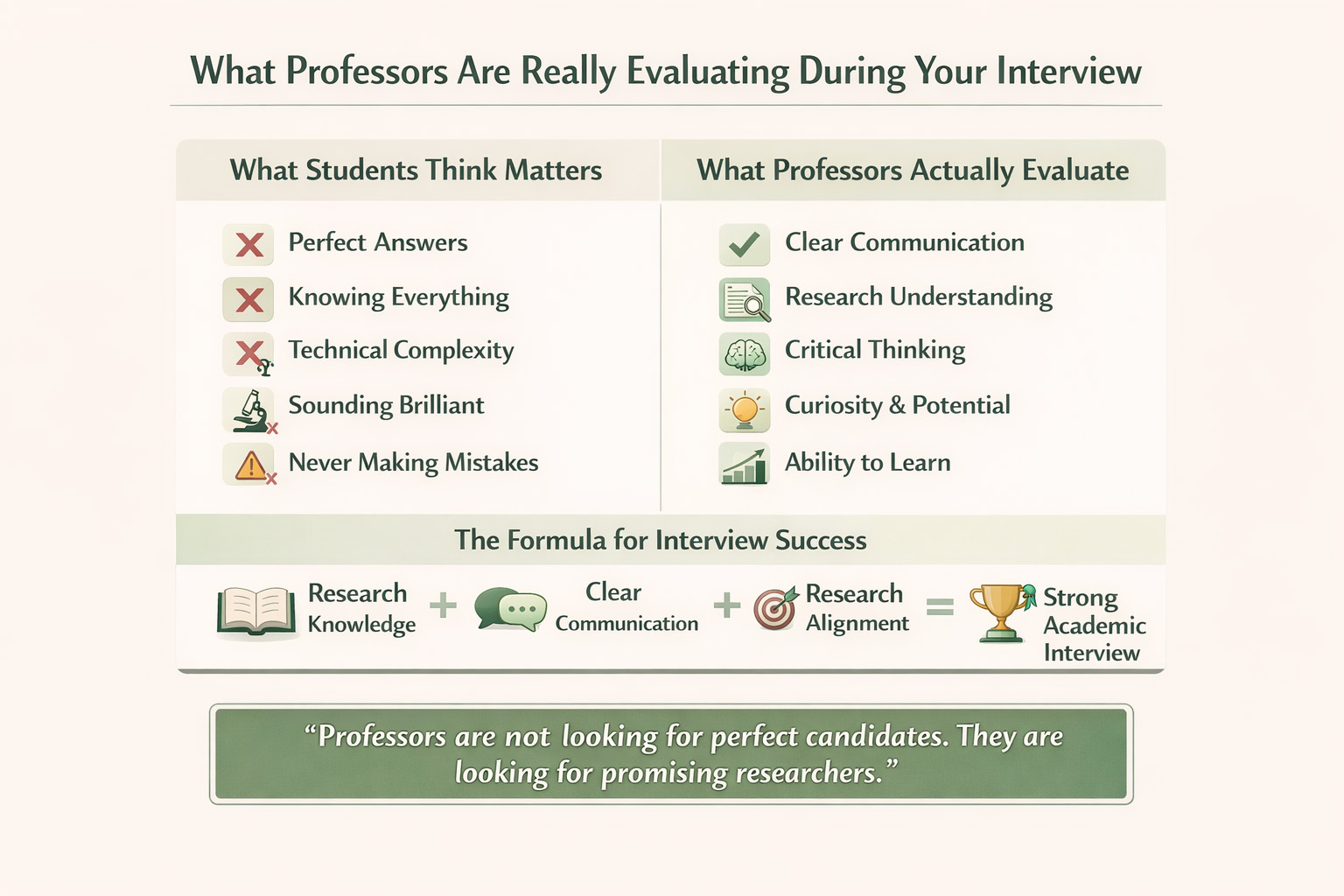
Why Mock Interviews Work So Well
Mock interviews help because they recreate pressure in a safe environment the first time you answer difficult questions should not be during the real interview.
Practice helps you:
know weak answers
improve communication
reduce hesitation
become more comfortable under pressure
This is why interview preparation has such a significant impact on confidence.
Many applicants underestimate how much preparation influences the first impression they create. Learn more about how interview preparation shapes first impressions.
How Acatrix Helps Students Feel More Confident
The Acatrix Interview Preparation Assistant helps applicants:
practice realistic interview questions
simulate academic interview scenarios
improve research communication
identify weak answers
reduce interview anxiety through repetition
Instead of walking into interviews uncertain about what to expect, applicants can build confidence through structured preparation.
If you want to practice realistic academic interview questions, receive personalized feedback, and build confidence before the real interview, explore the Acatrix Interview Preparation Assistant
Start Your Free Trial Today!
Everything You Need for Academic Applications in One Place
Whether you are preparing your SOP, contacting professors, practicing interviews, or tracking multiple university applications, Acatrix brings your entire academic application workflow into one structured system designed for students, researchers, and PhD applicants worldwide.