
The Problem of Research Overload and the Rise of Smart Summarization
You've probably felt this before: hours into a research paper, and you still can't say in one sentence what it actually contributes. That's not a reading problem, it's a structure problem. Academic papers aren't written to be skimmed, and pulling out what actually matters (the real research gap, the methodology that holds up, the finding worth citing) takes more than just reading faster.
This is exactly where Acatrix changes the workflow. Instead of summarizing papers in isolation, it helps you find the research that's actually relevant to your goals first, then turns it into structured, research-ready insight, built for literature reviews, SOPs, and PhD applications, not just quick overviews. Start summarizing smarter
In this guide, you’ll learn how to summarize a research paper quickly, using proven methods, common pitfalls to avoid, and how AI tools like Akatarkis are transforming academic productivity.
Acatrix isn't just summarizing papers for you, it's the application assistant that turns hours of reading into research you can actually use in your SOP, your emails, and your application.
Why Summarizing Research Papers Is So Difficult
Before learning the best way to summarize research papers efficiently, it’s important to understand why this task is so challenging in the first place.
1. Dense Academic Language
Research papers are written for specialists, not general readers. Complex terminology and technical explanations make them hard to digest quickly.
2. Lack of Clear Structure for Readers
Even though papers follow academic formats (abstract, methodology, results), extracting the core message requires experience.
3. Information Overload
A single paper can contain multiple layers of data, citations, and arguments—making it difficult to distinguish what truly matters.
4. Time Constraints
Researchers often need to review dozens of papers for literature reviews or projects, making manual summarization inefficient.
This is why AI research assistant tools and structured paper summarization techniques are becoming essential in modern academia.
Start using Acatrix today and take full control of your university applications, before deadlines take control of you.
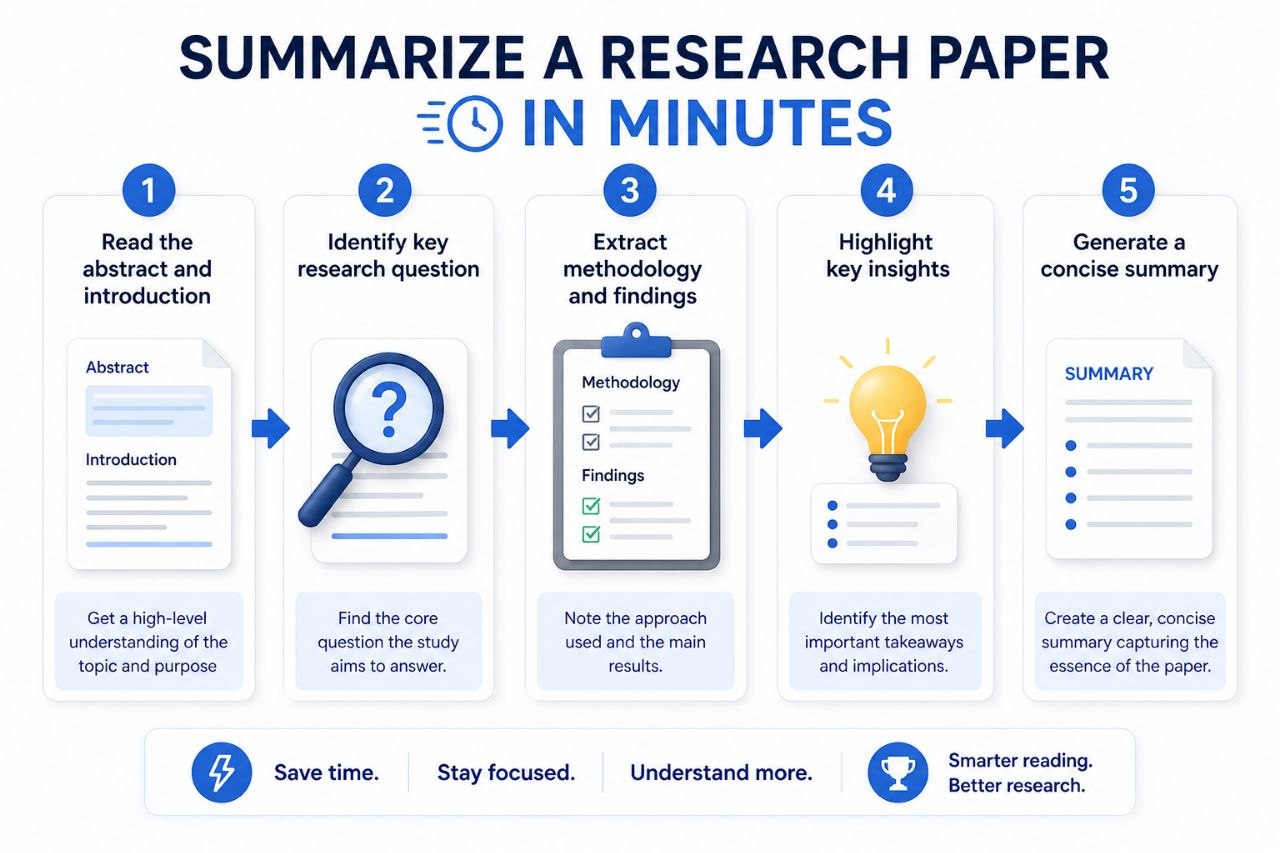
Step-by-Step Method: How to Summarize a Research Paper Quickly
Step 1: Start with the abstract
The abstract is your shortcut, it's already a condensed version of the problem, the method, and the findings. Read it slowly before you touch anything else. It should tell you whether this paper is even worth the deeper read.
Step 2: Pin down the research question
Before summarizing anything, ask one question: what is this paper actually trying to solve? Everything else in your summary builds around this single answer, it's the backbone that keeps your summary from turning into a list of disconnected facts.
Step 3: Extract the sections that actually matter
Not every part of a paper carries equal weight. Focus your attention on:
Introduction: the problem context
Methodology: how the research was actually conducted
Results: what was discovered
Conclusion: what it all means
Step 4: Filter noise from insight
Citations, repeated explanations, and secondary details rarely change your understanding of the paper's core contribution. Skip them unless they directly support the main argument — they're padding, not substance.
Step 5: Rewrite it in your own words
A strong summary doesn't echo the original phrasing. If you can't explain the paper without glancing back at the text, you haven't actually summarized it yet, you've just shortened it.
Step 6: Validate that you actually understood it
Here's the real test: can you explain this paper in 3–5 sentences, out loud, without notes? If yes, your summary works. If you're still reaching for the original text to fill gaps, go back, something in steps 2 through 5 got skipped.
This method works fine for one paper. But applying it manually across 15–20 papers for a literature review is where most applicants lose weeks. That's usually the point where a structured tool, not more willpower, makes the difference.
And since summarizing efficiently is only useful if you're applying to the right number of programs in the first place, our guide on how many PhD positions you should apply to can help you plan that side of the process too.
Common Mistakes in Paper Summarization
Even experienced researchers fall into these traps, usually not from a lack of skill, but from rushing the process.
1. Copy-pasting instead of synthesizing
A summary isn't a rewritten abstract with a few words swapped out. If you're leaning on the original phrasing, you're not summarizing, you're paraphrasing, and it shows.
2. Including too much detail
More detail doesn't make a summary more useful, it usually makes it harder to use. The whole point is distillation. If every sentence from the paper makes it into your summary, you've defeated the purpose.
3. Ignoring the research context
A finding means very little on its own. Without understanding why the study was conducted in the first place, what gap it was addressing, what came before it, summaries end up shallow, technically accurate but practically useless.
4. Skipping methodology interpretation
It's tempting to skip straight to results, but methodology is where credibility actually lives. A brilliant-sounding finding built on a weak method isn't as strong as it looks, and missing that distinction can quietly undermine your own literature review.
Of course, all of this matters most once you've narrowed down where you're actually applying, if that part is still open, our guide on 10 countries in Europe you should consider for a PhD in 2026 is a good place to start.
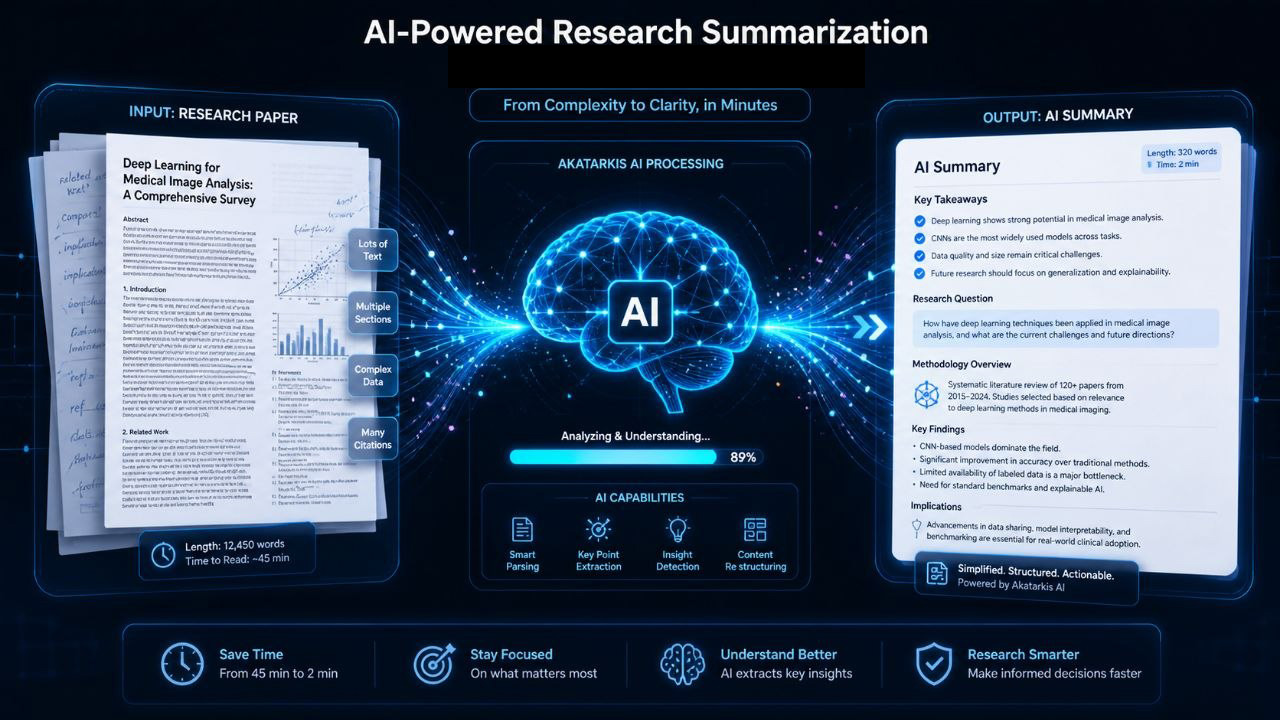
How Acatrix Solves the Research Summarization Problem
Traditional summarization methods are time-consuming and inconsistent. This is where AI changes everything.
Platforms like Acatrix act as intelligent AI research assistants, designed specifically to handle academic overload.
What Acatrix Does Differently?
Automatically extracts key insights from research papers
Generates structured, readable summaries
Identifies methodology, results, and conclusions instantly
Helps users compare multiple papers efficiently
Instead of manually scanning pages of text, users can generate a high-quality research paper summary in seconds.
Why This Matters?
AI-powered summarization doesn’t just save time—it improves comprehension. By structuring complex information into digestible formats, tools like Akatarkis enhance learning and decision-making.
How ACATRIX Helps You Find the Right PhD Opportunity
Finding a PhD position is only the beginning. Once you have 10–15 potential positions, you need to determine which ones are actually worth applying to.
ACATRIX helps you turn a broad PhD search into a more structured process.
ACATRIX brings these stages into one academic application workflow, including:
CV review and feedback
SOP and research statement support
Professor email drafting
Research and paper summaries
Application Q&A
Personalized interview preparation
Application tracking
Start Now!
This module is part of the Acatrix Application System, which also includes:
Research Statement & SOP Drafting