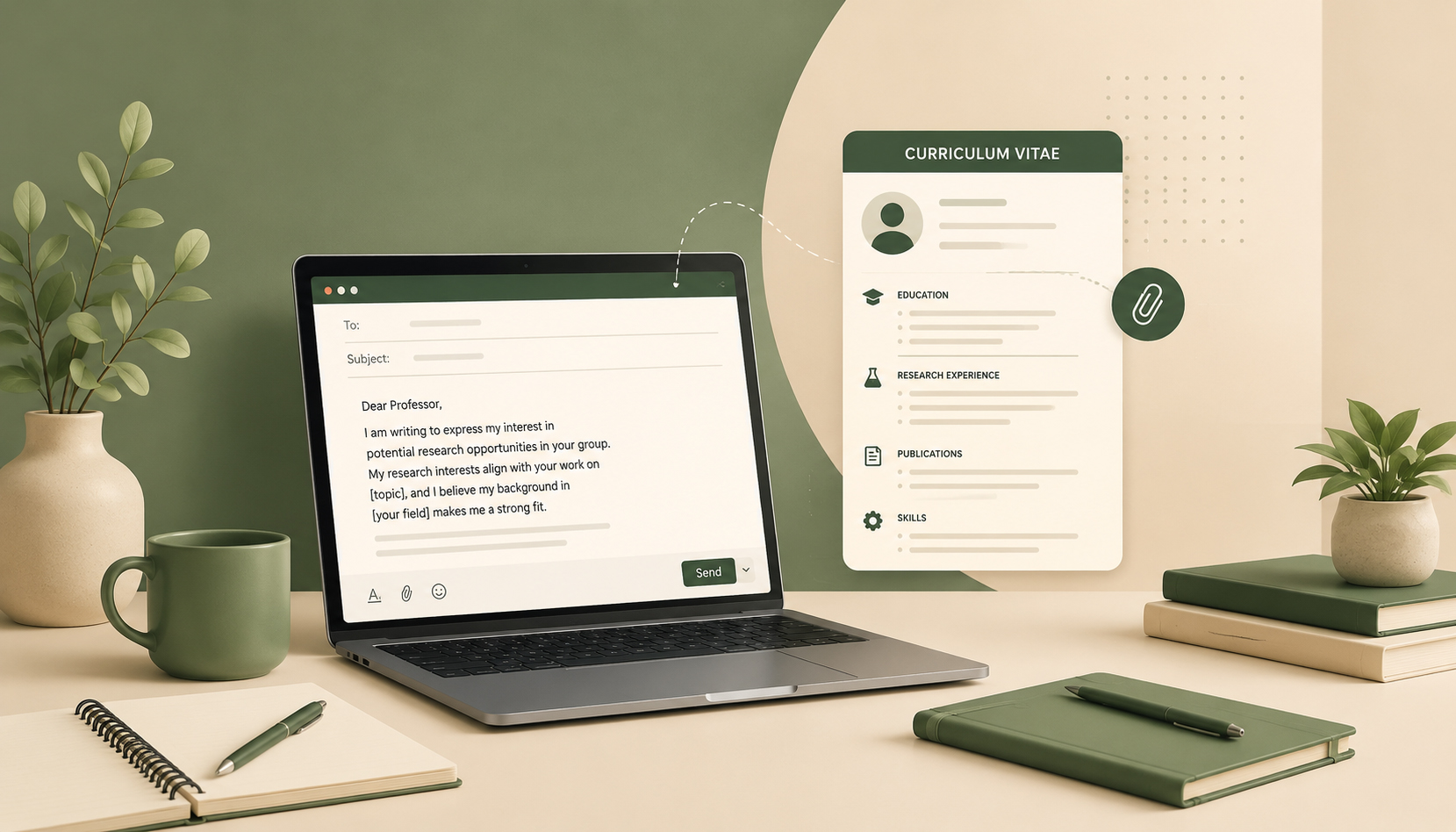
Should I Attach My CV in the First Email to a Professor?
The Short Answer: Yes, But Only If It's Relevant
One of the most common questions among prospective PhD students is whether they should attach their CV in the very first email to a professor.
The short answer is yes. In most cases, attaching a well-prepared academic CV can increase your chances of receiving a response because it allows the professor to quickly evaluate your academic background, research experience, publications, technical skills, and overall fit for their research group.
However, sending a CV without context, attaching too many documents, or emailing an outdated resume can have the opposite effect.
If you're still learning how academic communication works, start by reading the comprehensive guide on academic email writing available on the Acatrix blog. You can also explore the resources and support services available on the Acatrix to improve your application strategy.
Start your application profile!
Why Professors Want to See Your CV
Professors receive dozens, sometimes hundreds of emails from prospective students every year.
When your CV is attached, they can quickly determine:
Your academic background
Research experience
Publications and conference presentations
Technical and laboratory skills
Scholarships and awards
Whether your profile matches their current projects
Without a CV, a professor may need to request additional information before making an assessment, which creates extra work and may reduce the likelihood of receiving a response.
What Makes a Strong Academic CV?
Attaching a CV only helps if the document itself is relevant and professional.
A strong academic CV typically includes:
1. Educational Background
Degree titles
Universities attended
Graduation dates
GPA (if competitive)
2. Research Experience
Research projects
Thesis work
Laboratory experience
Research assistant positions
3. Publications and Presentations
Even if you have only one publication or conference presentation, include it.
4. Technical Skills
Programming languages
Laboratory techniques
Statistical software
Research tools
5. Awards and Scholarships
Academic achievements help professors evaluate your potential as a researcher.
When Should You Definitely Attach Your CV?
There are several situations where attaching a CV is highly recommended.
1. You Are Applying for a PhD Position
For doctoral applications, a CV is almost always expected.
2. You Are Seeking Research Opportunities
Whether you're looking for a research assistantship, collaboration, or supervision, your CV helps demonstrate your qualifications.
3. You Have Relevant Research Experience
If your experience aligns with the professor's research interests, attaching your CV makes it easier for them to identify that match.
When You May Not Need to Attach a CV
1. The Professor Explicitly Requests No Attachments
Always follow the instructions listed on the professor's website or lab page.
2. Initial Networking Emails
If you're simply introducing yourself during a conference or networking event, you may wait until the professor expresses interest.
However, for PhD inquiries, attaching a CV remains the safer choice.
Your Academic Journey: From Search to Settlement. START FOR FREE TODAY!
Should You Attach Other Documents?
Many applicants assume that sending more documents increases their chances.
In reality, it often creates friction.
1. Recommended Attachments
Academic CV
One-page research summary (if highly relevant)
2. Usually Avoid Sending
Full transcripts
Complete thesis manuscripts
Recommendation letters
Certificates
Multiple research papers
Common Mistakes Students Make
Many applicants hurt their chances before a professor even reads their email.
For a deeper discussion, check out our guide on 5 mistakes to avoid when emailing professors for research positions.
Some of the most common mistakes include:
1. Attaching Too Many Files
Professors are busy. Three or four large attachments can discourage them from opening your email.
2. Sending a Generic CV
Your CV should be tailored toward research and academic achievements.
3. Writing a Long Email
The CV should provide supporting details. Your email should remain concise.
4. Forgetting File Names
Avoid file names like:
CV_Final.pdf
Resume_New.pdf
Instead use:
Firstname_Lastname_CV.pdf
What If the Professor Doesn't Reply?
Even strong candidates sometimes receive no response. A lack of reply does not necessarily mean rejection.
Professors may be:
Busy with teaching
Managing grants
Traveling
Receiving hundreds of inquiries
If you haven't received a response after 7–14 days, consider sending a professional follow-up message.
You can learn the process in our guide on how to write a follow-up email to a professor after no response.
You may also want to understand why professors don't reply to emails before assuming your application has been ignored.
Improve Your Academic Emails Before Sending Them
A strong CV alone is not enough!
Many qualified applicants fail to receive responses because their emails lack structure, personalization, or a clear research fit.
At Acatrix, we help students:
Review academic emails
Improve CVs for PhD applications
Refine research statements
Prepare for professor interviews
Strengthen their overall application strategy
Before contacting potential supervisors, consider having your documents reviewed by experts to maximize your chances of success.
Start your application profile!
Best Practices for Attaching Your CV
Before sending your first email to a professor, follow this checklist:
✓ Attach a professional academic CV
✓ Use a clear PDF format
✓ Keep your email concise
✓ Mention your research interests
✓ Demonstrate alignment with the professor's work
✓ Avoid unnecessary attachments
✓ Proofread everything before sending
Following these practices can significantly improve your chances of receiving a positive response.
Complete guide to using Acatrix for managing your academic applications effectively
How Acatrix Helps Students Communicate with Professors More Effectively
Writing a strong email to a professor involves much more than attaching a CV. Many applicants have impressive academic backgrounds but still struggle to receive responses because their emails are too generic, poorly structured, or fail to demonstrate a clear research fit.
Acatrix supports students throughout the academic application journey, helping them create professional and persuasive communications that stand out in a professor's inbox.
You can learn the process in our guide on how to write a follow-up email to a professor after no response.
If you want support beyond email writing and CV preparation, explore how Acatrix simplifies every step of the academic application journey, from finding opportunities and drafting application documents to interview preparation and application tracking.
Our support includes:
Academic email review and optimization
CV review and feedback for graduate school applications
SOP drafting and editing
Research position and supervisor search support
Interview preparation for PhD and research programs
Application tracking and organization
Personalized guidance for academic applications
Whether you are preparing your first email to a potential supervisor or following up after submitting an application, Acatrix can help you present your academic profile more effectively and avoid common mistakes that reduce response rates.
By combining a strong academic CV with a well-crafted email strategy, applicants can significantly improve their chances of establishing meaningful connections with professors and securing research opportunities.
Manage your entire academic application journey with Acatrix
Everything You Need for Academic Applications in One Place
Whether you are preparing your SOP, contacting professors, practicing interviews, or tracking multiple university applications, Acatrix brings your entire academic application workflow into one structured system designed for students, researchers, and PhD applicants worldwide.
Start Today!
Related Guides for Academic Applications
1. Personal Statement vs SOP: What’s the Difference?
2. Best Way to Track Multiple University Applications
3. How to Write a Follow-Up Email to a Professor After No Response
4. Why Professors Don’t Reply to Emails
5. How to Turn Any Research Paper into a High-Quality Summary in Minutes
6. Top Personal Statement Mistakes and How to Avoid Them
7. What to Wear to a PhD Interview
8. How to Stop Feeling Nervous Before Academic Interviews
9. AI in Academic Applications: Boost or Risk?
Frequently Asked Questions
1. Should I always attach my CV in the first email to a professor?
In most cases, yes. A CV helps professors quickly evaluate your qualifications and research background.
2. Should my CV be in PDF or Word format?
PDF is generally preferred because formatting remains consistent across devices.
3. Can I attach both my CV and transcript?
Usually, your CV is sufficient unless the professor specifically requests transcripts.
4. How long should an academic CV be?
For prospective graduate students, two to four pages is typically acceptable, depending on experience.
5. What should I name my CV file?
Use a professional format such as Firstname_Lastname_CV.pdf.
6. What if I don't have research experience yet?
Focus on academic projects, coursework, technical skills, internships, and relevant achievements that demonstrate your potential.