
What to Wear to a PhD Interview: Dress for Confidence and Success
What if the smallest detail in your PhD interview could influence how you're perceived before you even begin discussing your research?
As a PhD applicant, you've probably spent hours preparing for potential interview questions, reviewing your research interests, and learning about the faculty members you'll be speaking with. But have you thought about what you'll wear?
While your academic background and research potential will always be the most important factors, your appearance plays a role in the overall impression you create. In fact, many applicants underestimate how seemingly minor details can contribute to the way interviewers perceive their professionalism, confidence, and preparedness.
That's why understanding how to how to prepare for an academic interview is just as important as preparing the right answers. And one of the easiest ways to do that is by choosing appropriate attire.
In this guide of Acatrix, you'll learn exactly what to wear to a PhD interview, what mistakes to avoid, and how to dress professionally for both in-person and virtual interviews.
Quick Answer: What Should You Wear to a PhD Interview?
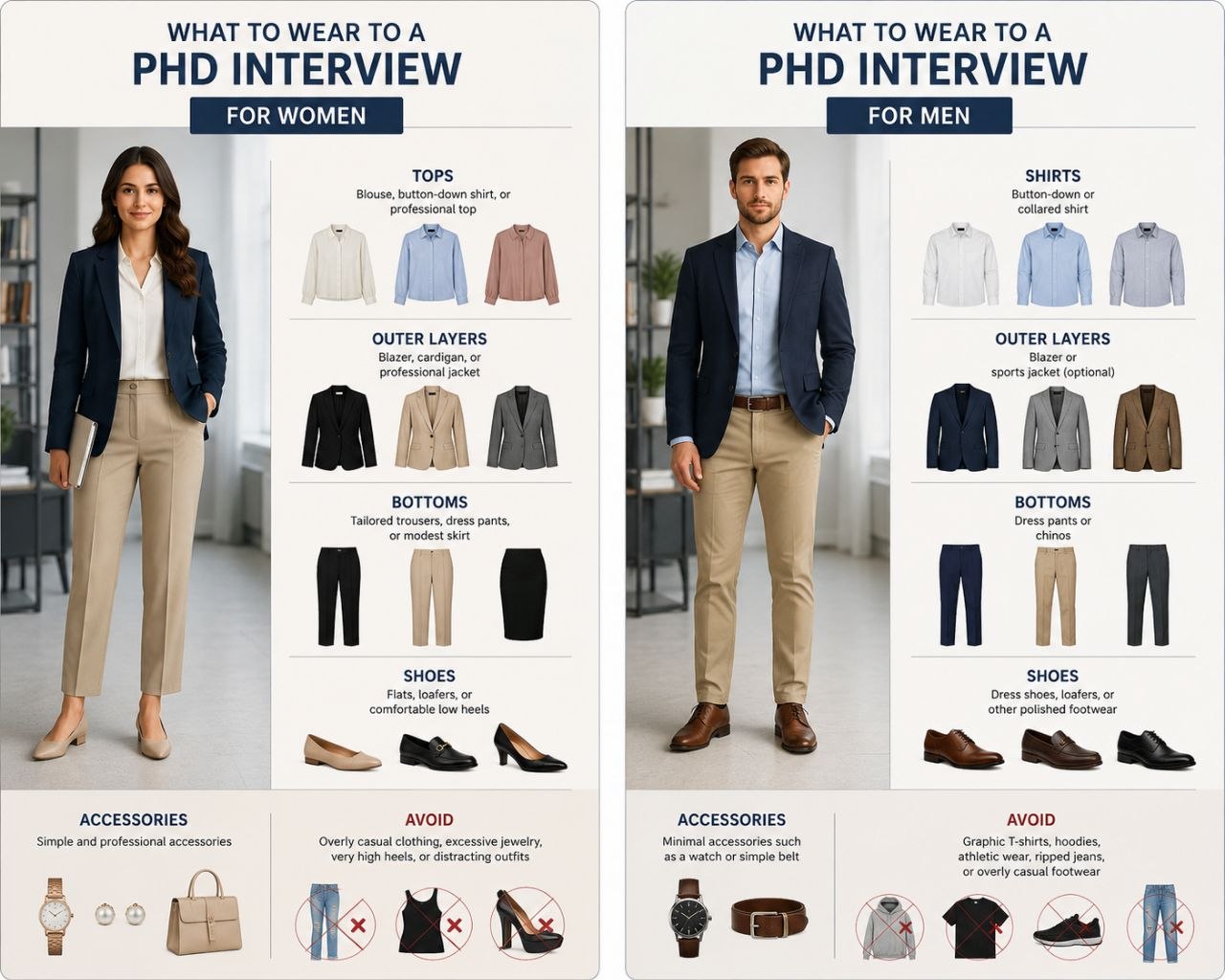
For most PhD interviews, business casual or business professional attire is the safest choice. Your goal is to look polished, professional, and confident while remaining comfortable enough to focus on the conversation rather than your outfit.
For Men
Recommended options include:
A button-down shirt or collared shirt
Dress pants or chinos
A blazer or sports jacket (optional but recommended)
Dress shoes, loafers, or other polished footwear
Minimal accessories, such as a watch or simple belt
Avoid graphic T-shirts, hoodies, athletic wear, ripped jeans, or overly casual footwear.
For Women
Recommended options include:
A blouse, button-down shirt, or professional top
Tailored trousers, dress pants, or a modest skirt
A blazer, cardigan, or professional jacket
Flats, loafers, or comfortable low heels
Simple and professional accessories
Avoid overly casual clothing, excessive jewelry, very high heels, or outfits that may feel distracting or uncomfortable during the interview.
A Final Tip
Remember that the purpose of your outfit is not to impress the interview panel with fashion. Instead, it should help you appear professional, prepared, and focused on your academic qualifications. When in doubt, it is usually better to be slightly overdressed than underdressed.
Why Your Appearance Matters in a PhD Interview
Unlike corporate job interviews, PhD interviews focus heavily on your academic background, research potential, and fit with the department. However, appearance still plays a role in creating a positive first impression.
Professional attire demonstrates:
Respect for the interview process
Attention to detail
Professional communication skills
Readiness for academic and research environments
Your clothing should support your credibility rather than distract from your qualifications.
Your outfit is just one element of the overall interview experience. Understanding how interview preparation shapes first impressions can help you approach every aspect of your PhD interview more strategically.
What to Wear to an In-Person PhD Interview
For in-person interviews, candidates should generally aim for business casual or business professional attire.
For Men
Appropriate options include:
Dress shirt or button-down shirt
Chinos or dress pants
Blazer (optional but recommended)
Dress shoes or clean leather shoes
A full suit is usually not required unless specifically requested.
For Women
Appropriate options include:
Blouse or professional top
Dress pants, tailored trousers, or a modest skirt
Blazer or cardigan
Professional flats, loafers, or low heels
Comfort is important, particularly if the interview includes campus tours, research presentations, or meetings with multiple faculty members.
What to Wear to a Virtual PhD Interview
Virtual interviews have become increasingly common for international applicants.
Even though the interview takes place online, professional attire remains important.
Recommended virtual interview attire:
Solid-colored professional clothing
Neutral colors such as navy, gray, black, or white
Avoid distracting patterns
Dress professionally from head to toe
Many candidates underestimate how attire affects confidence and professionalism during online interviews.
In addition to clothing, pay attention to:
Lighting
Camera positioning
Background appearance
Audio quality
Common Clothing Mistakes During PhD Interviews
1. Dressing Too Casually
Avoid:
Hoodies
Athletic wear
Graphic T-shirts
Flip-flops
Wrinkled clothing
2. Dressing Too Formally
A PhD interview is not usually a corporate executive interview. An expensive suit or highly formal attire may feel out of place depending on the institution and discipline.
3. Ignoring Cultural Expectations
Dress codes can vary slightly across countries and universities. Research the institution beforehand if possible.
4. Choosing Uncomfortable Clothing
Discomfort can negatively affect confidence and concentration during the interview.
Does Dress Code Vary by Academic Field?
Yes. Expectations may differ slightly.
1. STEM Fields
Science and engineering departments often have relatively relaxed cultures. Business casual attire is usually sufficient.
2. Business and Economics
These disciplines may favor slightly more formal attire.
3. Humanities and Social Sciences
Professional but approachable attire is typically appropriate.
Regardless of the field, professionalism should always remain the priority.
How to Prepare Your Outfit Before Interview Day
A few simple preparations can help reduce stress:
Select your outfit at least one day in advance.
Ensure clothing is clean and wrinkle-free.
Test your appearance on camera if interviewing online.
Choose comfortable shoes.
Avoid strong fragrances or distracting accessories.
Small details can contribute to a more confident interview experience.
Looking professional is important, but your answers matter even more. Before your interview, review these most common PhD interview questions and practice how you would respond.
Need Help Preparing for Your PhD Interview?
Choosing the right outfit is only one part of interview success. Many applicants struggle more with:
answering academic questions,
discussing research interests,
and communicating effectively with faculty members.
At Acatrix, we help students prepare for PhD and graduate school interviews through personalized mock interviews, interview coaching, and expert feedback. Our interview preparation services are designed to help applicants build confidence, improve communication skills, and perform at their best during admissions interviews.
Need Help Preparing for Your PhD Interview?
Get Personalized Support from Acatrix
A great outfit can help you make a strong first impression, but successful interviews require preparation, practice, and confidence. At Acatrix, we help applicants prepare for every stage of the interview process through:
Personalized Mock Interviews
Interview Preparation Sessions
Practice with Common PhD Interview Questions
Research Presentation Feedback
Communication and Confidence Coaching
Personalized Performance Feedback
Interview Strategy and Preparation Plans
Support for PhD, Master's, and Scholarship Interviews
Whether you're meeting a potential supervisor, attending a doctoral admissions interview, or preparing for a competitive scholarship interview, Acatrix can help you approach the conversation with greater confidence and clarity.
For a comprehensive overview, see the Complete Guide to Using Acatrix for Academic Applications.
Everything You Need for Academic Applications in One Place
Whether you are preparing your SOP, contacting professors, practicing interviews, or tracking multiple university applications, Acatrix brings your entire academic application workflow into one structured system designed for students, researchers, and PhD applicants worldwide.